FAQ About Tuning
We receive numerous questions about tuning every day. Below are some of the most frequently asked questions and their answers.
Can you provide a more aggressive performance tune for my car without affecting its economy?
When we tune a car, the fueling table is adjusted to be accurate for low and full-throttle loads. These two aspects are independent of each other, so no extra full-throttle power can be gained with a fuel economy tune, and little if any, extra fuel economy can be achieved above the way we already tune the cars.
How safe is the tune you do compare to stock?
We engine tune the car within safe limits and ensure no apparent knock could damage your engine, with the air-fuel ratios in the correct range. The tune is also set up so that its parameters cannot change. If it does start knocking or is too lean, something has changed mechanically or with the engine’s associated sensors. The car needs to stay on the fuel it was tuned with; for example, if it was tuned on 98, keep using 98 and not 95 or 91. If issues occur, get it tweaked and checked, as over time, things will deteriorate on the car, and the engine can start to misbehave. We see many slowly appearing problems, such as fuel pumps rusting out, injectors getting dirty, catalytic converters blocking, spark plugs increasing in the gap, spark plug leads perishing, and engine oil being induced.
Can you tune my V6?
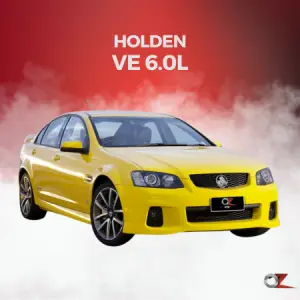
We can tune all V6 Commodores from the Alloytec VZ to the VE V6 and LFX VF V6.
Can my car lose its tune?
A car can only lose its tune if it is intentionally wiped by another tuner or ourselves. Resetting the system by taking the battery lead off does nothing to the tune settings.
How much power will my car make with engine tuning?
Even within the same model, engines vary significantly in power when tuned, even in cars with the same mods. Cars that have always been gently driven and have low km tend to make the least power. You will notice a solid difference in throttle response, be able to use high gears at a lower speed, and the car will have more power at all rpm while using less fuel. We could quote our best-ever numbers on the dyno, but that wouldn’t be a fair answer as the average cars are often 20 rwkw lower than that. We have seen vehicles gain as much as 30 rwkw from a tune, even in the later model HSV LS3. They often gain 30 rwkw from a tune and OTR and around 20 rwkw from a full exhaust. LS1s typically earn more than this. We recently saw an LS3 Automatic with full-performance exhaust and OTR cold air intake make 304rwkw (406rwhp) on our Mainline Hub Dyno. A recent 6L Automatic made 276rwkw with the same modifications. These are top-level stock-cammed numbers.
My car was tuned and has been running well, but it recently lost a lot of power while running smoothly. What could be the cause?
The most common cause is that the intake air temperature sensor is not plugged in or has stopped working. The second most likely cause is blockages in the exhaust or a dirty air filter. Start by having the catalytic converters inspected and the air filter cleaned. We once saw a car have a filter fall out of a cheap OTR. Check the fuel injectors for equal flow or have them cleaned or replaced.
My car varies in how it idles and changes RPM at idle every 30 seconds. What could be causing this?
This is likely caused by a faulty oxygen (O2) sensor. When the O2 sensor is sick, the fuel trims build to the maximum and then reset to zero, causing the rhythmic change in idle RPM. The best solution is to replace the faulty O2 sensor or both if they are old.
My car doesn’t idle consistently. It’s an LS1 with a cable throttle body. What is the cause?
A faulty throttle position sensor (TPS) is usually the cause of inconsistent idling in cars with cable throttle bodies. The TPS is not consistently reporting zero per cent during a no-throttle condition, which is important because the engine enters idle mode based on this signal. The faulty TPS will often report above one per cent, causing the engine RPM to vary up and down or constantly stay high, known as hunting. This is most common when the throttle body area is hot. The best solution is to replace the TPS and sometimes modify the mechanism if the connection point is worn.
I can hear a ping pong ball sound in my engine under load. What is the cause of this, and is it safe?
The sound you likely hear is pinging, caused by the fuel igniting too early in the engine’s cycle. This can happen when the engine has excessive timing advance for its fuel. The solution is to change the engine’s tune calibration or increase the fuel octane. Sometimes, pinging can occur because someone has put 91 octane or E10 in a car tuned for 98. Drive the car gently and keep the engine load from where it pings until it is fixed. Pinging can harm the engine, so addressing this issue immediately is essential. Other causes of pinging that can occur over time include blocked catalytic converters, blocked exhaust, dirty injectors, failing fuel pumps, and more. We recently had a car pinging badly because the earth strap to the passenger side head was damaged.
I upgraded the cam, and now my engine is stalling frequently. What is the fix?
Cam upgrades require more air at idle than standard. The solution is to adjust the tune so it isn’t too rich at idle and increase the airflow provided through the throttle body blade by drilling a hole in the blade or enlarging the existing one. Bigger and lumpier cams require the biggest holes. Be careful because if the hole is drilled too big, it may not be possible to have low enough RPM in coasting conditions without blocking up the hole and starting again.
I have had a cam upgrade, and the car is driving poorly at low RPM. What can be done?
The car must switch between the coast spark advance table and the drive spark advance table. The throttle position decides this switching. The best solution is to fix this in tune, assuming the air-fuel ratios are good at low loads.
Can LS engines be tuned accurately remotely?
Yes, a tuning device can be posted. It can read and flash the ECU with updated settings and collect data logs from driving, racing, or dyno, which can be analysed and used like a tune done in person.
Tuning Software
The two main tuning software systems for LS engines are EFILive and HP Tuners. Both are professional tools.