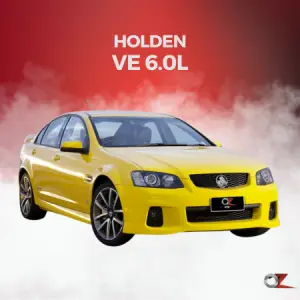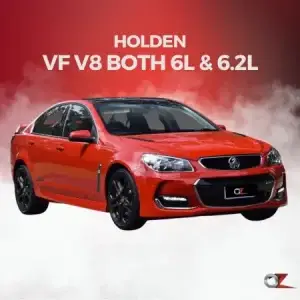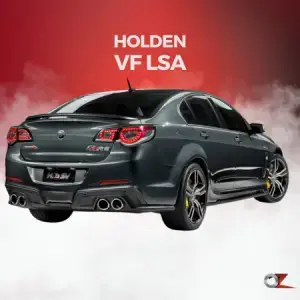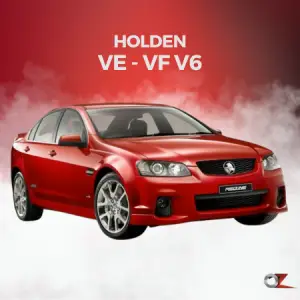
What Is the Best Cam for an LS3 Automatic?
For most street-driven LS3 automatic Commodores, Oztrack recommends staying at or below the HP3 camshaft. It can produce strong power, retain the standard stall converter and still accelerate cleanly from low engine speed.
The quick answer
The HP3 is normally the largest camshaft Oztrack recommends for an LS3 automatic street car using the standard converter. Smaller FE, DR and HP1 cams provide calmer low-speed behaviour. The HP3 still makes strong power while remaining workable in Drive at around 675 rpm.
Choosing an LS3 automatic cam
An automatic LS3 needs a camshaft that works against the load of the torque converter while the vehicle is stopped in Drive.
A cam that is too large can make the engine push against the brakes, surge at low speed or require more throttle to remain running. This often leads people toward a higher-stall converter.
At Oztrack, we prefer to select a cam that works well with the standard converter rather than fitting a high-stall converter to make an oversized cam acceptable.
- Stable idle while stopped in Drive
- Good response from low engine speed
- Strong mid-range acceleration
- Reduced tendency to push against the brakes
- Better behaviour in normal street driving
Oztrack automatic LS3 cam choices
These four camshafts cover most street-driven LS3 automatic combinations. Idle quality becomes more aggressive as cam size rises.
FE
212/218 · .562/.560 · 113 LSA
The calmest option. It can idle smoothly and slowly in Drive, with strong low-speed manners and little need for converter changes. Better fuel ecomomy than stock.
DR
218/228 · .575/.580 · 114 LSA
Slightly choppy at idle. It can normally idle at about 650 rpm in Drive and retains good street behaviour. Solid early torque and good economy.
HP1
223/230 · .608/.608 · 114 LSA
More noticeable at idle than the DR. It can also work at around 650 rpm in Drive when the engine and calibration are properly set up.
HP3
227/236 · .608/.608 · 115 LSA
Our preferred upper limit for most street LS3 automatics. It can idle at around 675 rpm, make strong power and accelerate well with the standard stall converter.
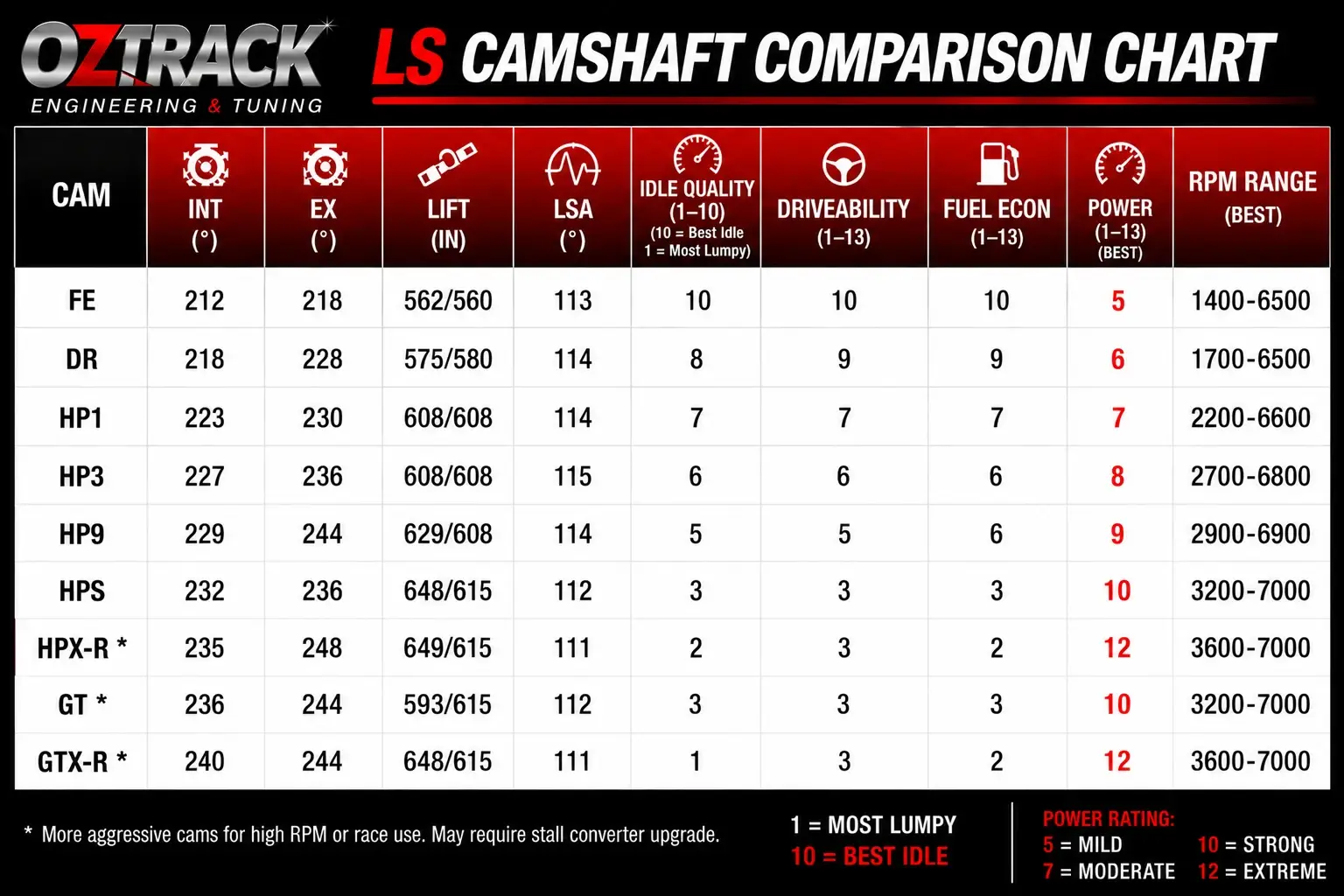
LS camshaft comparison
| Cam | Intake | Exhaust | Lift | LSA | Idle character | Automatic use | Best operating range |
|---|---|---|---|---|---|---|---|
| FE | 212 | 218 | .562/.560 | 113 | Calm | Excellent with standard converter | 1400–6500 rpm |
| DR | 218 | 228 | .575/.580 | 114 | Light chop | Very good with standard converter | 1700–6500 rpm |
| HP1 | 223 | 230 | .608/.608 | 114 | Noticeably choppy | Good when properly matched and tuned | 2600–6800 rpm |
| HP3 | 227 | 236 | .608/.608 | 115 | Strong cam idle | Largest Oztrack choice for most standard-stall street cars | 2600–6800 rpm |
| HP9 | 229 | 244 | .629/.608 | 114 | Aggressive | More likely to push against converter and brakes | 2900–6900 rpm |
| HPS | 232 | 236 | .648/.615 | 111 | Very aggressive | Normally needs a looser converter | 3300–7000 rpm |
| HPX-R | 235 | 248 | .649/.615 | 111 | Race-style idle | Not our preferred street automatic combination | 3600–7000 rpm |
| GT | 236 | 244 | .593/.615 | 112 | Very aggressive | Normally needs converter and drivetrain changes | 3300–7000 rpm |
| GTX-R | 240 | 244 | .648/.615 | 111 | Race-style idle | Not suited to most standard-stall street cars | 3600–7000 rpm |
Why Oztrack does not favour high-stall converters for street use
A larger cam often creates another problem to solve
Once the cam becomes larger than the HP3, the engine may push harder against the brakes while stopped in Drive. A higher-stall converter can add looseness at idle, but it also changes the way the car drives.
A loose converter can increase slip, heat and engine speed during normal driving. It may make parking, slow traffic and light-throttle driving less direct.
Our approach is to use a cam that provides strong performance without requiring a high-stall converter for an otherwise street-focused car.
Why the HP3 works well with the standard stall
It can idle in Drive
A properly set up HP3 combination can idle at around 675 rpm while the automatic transmission is in Drive.
It still accelerates from low speed
The HP3 can produce enough low and mid-range torque to move the car cleanly without relying on a loose converter.
It can make strong peak power
Its 227/236 duration and 115-degree lobe separation allow strong upper-rpm airflow without moving too far away from street use.
It avoids unnecessary converter changes
Retaining the standard converter keeps the vehicle more direct during light-throttle driving and normal road use.
Which cam should you choose?
Choose the FE when
You want a calm idle, strong low-speed driving and minimal change to the way the automatic behaves in traffic. Plus good fuel economy.
Choose the DR when
You want a slightly choppy idle with good road manners and a broad operating range.
Choose the HP1 when
You want a more obvious cam sound and stronger upper-rpm performance while retaining a street-focused automatic setup.
Choose the HP3 when
You want the largest cam Oztrack normally recommends for a standard-stall LS3 automatic street car.
LS3 automatic camshaft questions
What is the largest cam Oztrack recommends for an LS3 automatic?
The HP3 is normally the largest cam Oztrack recommends for a street-driven LS3 automatic using the standard stall converter.
Can the HP3 use the standard torque converter?
Yes. Oztrack has found that the HP3 can make strong power and accelerate well in Drive with the standard stall converter when the engine and ECU calibration are properly set up.
What rpm can an HP3 idle at in Drive?
An HP3 can normally idle at around 675 rpm in Drive in a properly matched and tuned LS3 automatic combination.
Which LS3 cam has the calmest idle?
The FE has the calmest idle of the listed Oztrack cam choices. It can idle slowly in Drive and suits owners who place greater importance on low-speed behaviour.
Do the DR and HP1 cams sound choppy?
Both have a noticeable cam idle. The DR is mildly choppy while the HP1 has a stronger cam sound. Both can normally idle at about 650 rpm in Drive.
Why can a large cam push against the brakes?
A large cam may need more airflow and engine speed to remain stable while the converter loads the engine in Drive. The extra throttle and torque can make the vehicle push forward against the brakes.
Does a bigger LS3 cam always make the car faster?
No. A larger cam may improve peak power while reducing low-speed torque and drivability. The best result comes from matching the cam to the converter, gearbox, diff ratio, engine and intended use.
Related Oztrack guides
Need the right cam for your LS3 automatic?
Oztrack can match the camshaft, valvetrain and ECU calibration to your engine, transmission and intended use.