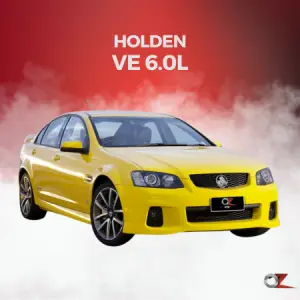
Oztrack LS Camshaft Development
Why Do LS Cam Upgrades Gain So Much Power?
A camshaft upgrade can produce a large power gain in LS1, LS2, L76, L77, L98, LS3, LSA and LS7 engines.
The result depends on the factory cam, the replacement cam profile and the supporting parts fitted to the engine.

The Main Reason for the Power Gain
A larger cam opens the valves further and keeps them open longer. This allows the engine to move more air.
- More valve lift
- Longer valve-opening time
- More airflow at higher rpm
- A different spread of torque
Factory limitations
Why Factory LS Camshafts Restrict Power
Factory camshafts must meet emissions, noise, fuel-use and idle-quality targets. This often leaves a large amount of performance available.
L76 and L77 factory cams
The L76 and L77 use some of the smallest factory LS camshafts. They have low valve lift and short duration.
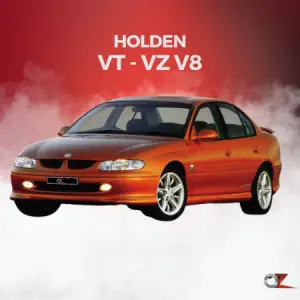
These engines were used in the VZ 6.0-litre, early VE 6.0-litre automatics and later VE Series II and VF 6.0-litre models.
LS2 and LS3 factory cams
The HSV LS2 and LS3 cams are among the better factory LS camshafts.
They can improve performance when fitted to some smaller-cam LS engines, but a purpose-designed performance cam can produce a much larger gain.
Cam size changes the shape of the power curve
A mild cam can improve low-speed torque and make more power across most of the rev range. A larger street cam may give away some torque below about 3,600 rpm but pull much harder above that point.
Larger race combinations can continue making power near 7,500 rpm or beyond, but they require the right engine, valvetrain and piston-to-valve clearance.
Oztrack camshaft design
How Oztrack Develops LS Camshafts
Oztrack develops camshaft specifications and lobe shapes using cam-design software, workshop testing and Mainline ProHub dyno data.
Designed in-house
We select the valve lift, duration, lobe separation and opening events to suit the intended engine and vehicle use.
CNC-manufactured lobes
We work with our camshaft manufacturer to produce the required lobe shape using modern CNC camshaft equipment.
Tested on one dyno
We compare results using the same Mainline ProHub dyno. Many test vehicles also share similar exhaust, OTR and supporting modifications.
Supporting parts
What Should Be Replaced During an LS Cam Upgrade?
A camshaft should not be fitted by itself. The valvetrain and related parts must suit the new lift, rpm range and intended use.
Valve springs and retainers
- Dual valve springs for most cam upgrades
- Light retainers where reduced valvetrain weight helps
- Spring pressure matched to the cam and rpm range
Pushrods and lifters
- Thicker chromoly pushrods
- Fresh lifters and lifter trays where required
- Genuine LS7 lifters for many street combinations
Gaskets and fasteners
- New head gaskets when the heads are removed
- New head bolts or suitable head studs
- New seals and required timing-cover gaskets
Why we often remove the cylinder heads
Removing the heads allows them to be cleaned and inspected. It also gives access to the lifters and lifter trays and makes spring installation easier.
Many higher-kilometre LS engines have wear in the lifters or trays. A cam upgrade is a good time to replace these parts before they cause a failure.
Cylinder-head options
Should You Add CNC-Ported Heads?
CNC-ported factory heads
CNC-ported factory heads can give a useful power gain, mainly above about 4,000 rpm.
Milling the heads can raise compression, but it also reduces piston-to-valve clearance. Some larger cams have little spare clearance.
We also recommend considering new valve seats while the heads are being rebuilt. Loose or failed valve seats can cause serious engine damage.
Aftermarket cylinder heads
A well-designed aftermarket head can provide more airflow and better piston-to-valve clearance than a ported factory casting.
Oztrack prefers AFR 260 heads for many 6.0-litre and 6.2-litre LS3-style combinations.
One Oztrack-built 427 using AFR 260 heads produced 453 rwkW.
Intake and exhaust
Supporting Modifications That Help a Cam Upgrade
OTR cold-air intake
A good OTR intake helps the engine breathe and supports the airflow required by the larger cam.
Oztrack commonly recommends the VCM OTR for VE and VF Commodores.
Performance exhaust
A suitable exhaust helps the cammed engine move air at higher rpm.
We commonly use DPE Manta systems with 1⅞-inch four-into-one headers, high-flow catalytic converters and twin 2.5-inch or twin 3-inch exhausts.
Intake manifold and throttle body
A larger throttle body only helps when the intake opening and manifold can use the extra airflow.
On a small cam, a larger manifold and throttle body may give little or no gain.
Valvetrain reliability
Rocker Bushes and Harmonic Balancer Upgrades
CHE rocker bush kit
We recommend replacing the factory rocker trunnion bearings with the CHE rocker bush kit.
The kit has been Spintron tested to 10,000 rpm. The bushes provide stable rocker movement and remove the risk of loose factory-style needle rollers.
25% underdrive balancer
The factory harmonic balancer can become unreliable at higher rpm.
A quality 25% underdrive balancer can improve reliability and reduce accessory drive losses slightly.
Real Oztrack results
Typical LS Cam Upgrade Power Gains
Results vary with engine size, compression, cylinder heads, exhaust, intake, fuel and tuning. These figures show examples recorded at Oztrack.
| Combination | Rear-wheel power | Peak torque |
|---|---|---|
| Standard L77 | About 230 rwkW | Varies by vehicle |
| Strong stock-cam example | 267 rwkW | 459 Nm |
| 6.0-litre with Oztrack LSV cam | About 327 rwkW | About 538 Nm |
| 6.0-litre or LS3 with Oztrack HP3 cam | About 340–350 rwkW | About 550 Nm |
| 6.0-litre with HPS cam and CNC factory heads | Up to 378 rwkW | Combination dependent |
| Built 6.0-litre race engine with HPX-R cam | 400 rwkW | 12:1 compression and CNC heads |
Choose the right combination
Plan Your LS Cam Upgrade with Oztrack
The best cam depends on the engine, gearbox, converter, exhaust, compression, driving use and the idle quality you want.