The LS3: Power, Problems and the Right Repair
The 6.2-litre LS3 is a strong performance engine, but not every factory block, cylinder head or valvetrain remains suitable for continued use. Learn what fails, what can be machined and when replacement sleeves or a complete rebuild make sense.
What is an LS3 engine?
The LS3 is a Gen IV all-aluminium pushrod V8 produced by General Motors. In Australia it appeared in several HSV models from 2008 and in the Holden VF Series II V8 range. Its cylinder-head airflow, 6.2-litre capacity and compact design make it well suited to standard street cars, cam upgrades, stroker builds and supercharged combinations.
Common Australian applications
- VE and VF HSV models
- Holden VF Series II SS, SSV and Motorsport models
- Chevrolet Camaro and Corvette applications
- Aftermarket crate-engine and conversion projects
Australian factory power ratings
LS3-powered Australian vehicles were released with several quoted outputs, including 304 kW, 317 kW, 325 kW and 340 kW. The vehicle calibration, exhaust, intake and model specification affect the final rating and measured rear-wheel power.
See real LS3 dyno results at Oztrack →Common LS3 engine problems
Many LS3 engines provide long service, but Oztrack also sees recurring faults during diagnosis and rebuilding. The condition of the individual engine matters more than a general claim that every LS3 is reliable or unreliable.
Core shift and thin cylinders
The cast cylinder position can vary within the aluminium block. A cylinder may have much less material on one side, increasing crack risk and sometimes leaving too little thickness to bore the cylinder safely.
Valve-seat failure
A loose or dropped valve seat can cause major piston, valve and cylinder-head damage. Cylinder heads should be inspected carefully when an engine has a misfire, loss of compression or mechanical noise.
Lifter and camshaft wear
A failed roller lifter can damage a camshaft lobe and send metal through the lubrication system. A tapping noise should be investigated before the engine suffers wider damage.
Piston and bore damage
Broken ring lands, worn bores, piston noise and cylinder scoring require accurate measurement before choosing pistons or the final bore size.
Bearing and oiling damage
Low oil pressure, contaminated oil and bearing wear can damage the crankshaft and block. A rebuild must address the cause, not only replace the failed bearing.
Valve-spring and valvetrain faults
Modified engines need springs, pushrods, lifters and clearances matched to the camshaft. Incorrect parts or geometry can shorten valvetrain life.
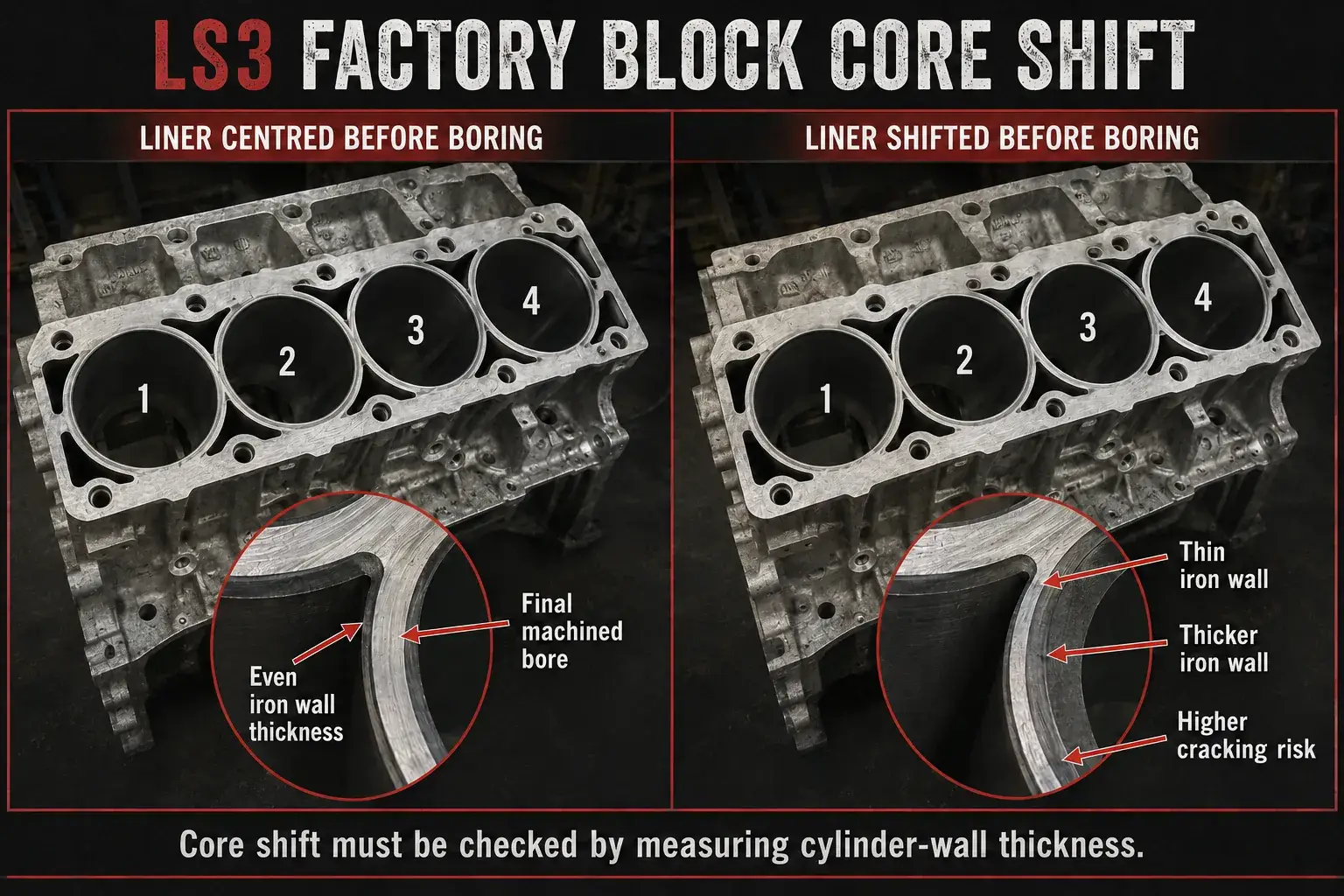
Core shift can leave one side of a factory LS3 cylinder much thinner than the other.
Why core shift changes the rebuild plan
Machining cannot be decided from the nominal factory bore size alone. The block must be cleaned, inspected and measured.
Core shift often contributes to cracked cylinder walls. It can also leave the thin side with too little material to bore out scoring, taper or wear safely. In those cases, simply fitting an oversized piston is not the correct repair.
A suitable block may only need torque-plate honing. A damaged or thin block may require one or more replacement sleeves. If the block cannot be repaired safely, replacement becomes the better choice.
View Oztrack engine machining services →What a failed LS3 lifter can damage
A noisy lifter is not always a minor top-end repair. If the roller stops turning, it can wear through the camshaft lobe. Metal contamination may then reach the oil pump, bearings and other internal parts.
Before recommending parts, Oztrack checks the camshaft, lifters, oil system and affected cylinder. When contamination or wider wear is present, a complete strip, clean and inspection may cost less than repairing the engine twice.
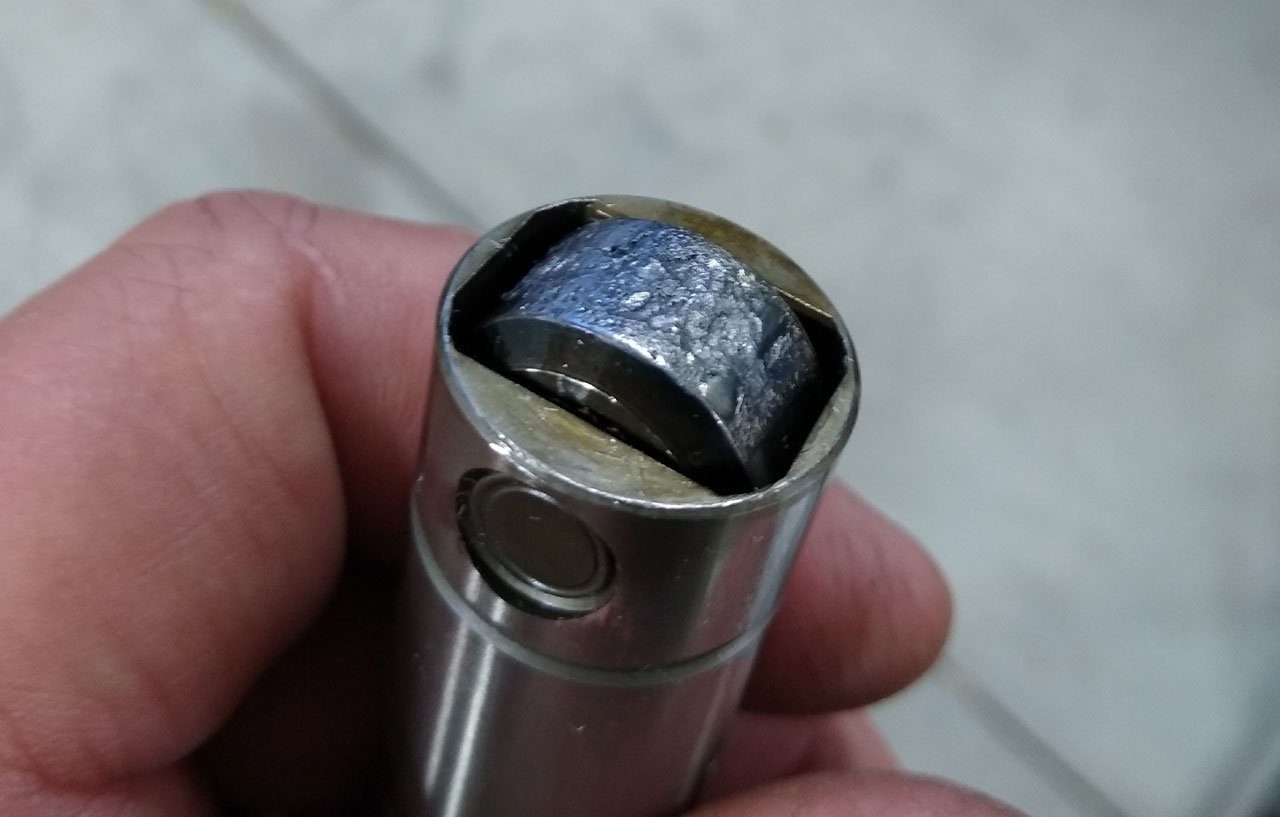
A damaged roller lifter can destroy a camshaft lobe and contaminate the engine.
LS3 crate engine or rebuild your original engine?
A crate engine looks like a quick solution, but a factory-new unit does not automatically remove every LS3 weakness. The right decision depends on the condition of your block, the intended power level, the vehicle and the parts included.
| Consideration | Factory crate engine | Measured LS3 rebuild |
|---|---|---|
| Block condition | New, but casting position and cylinder thickness are not selected for your original block. | Your block is stripped and measured before the machining plan is approved. |
| Cylinder finish | Supplied with the factory production finish and clearances. | Bore size and surface finish can be matched to the selected pistons, rings and use. |
| Internal parts | Fixed production specification. | Pistons, rings, bearings, camshaft and valvetrain can be selected for the application. |
| Existing problems | Replaces the complete engine but may retain known LS3 design risks. | Known weaknesses can be inspected and addressed during machining and assembly. |
| Vehicle setup | May still require installation parts and calibration. | The build can be planned with the vehicle, transmission, fuel, exhaust and tuning requirements. |
How Oztrack rebuilds an LS3
Oztrack performs LS engine machining and rebuilding in-house at our Penrith workshop. The final specification is chosen after inspection rather than selling every customer the same combination.
Inspect
Strip, clean and check the block, crankshaft, pistons, bearings, lifters and cylinder heads.
Measure
Measure the bores, decks, bearing clearances and cylinder finish. Check whether boring or sleeves are required.
Machine and assemble
Complete the required boring, torque-plate honing, surfacing, sleeving and blueprint assembly.
Install and tune
For complete vehicle jobs, install the engine, complete initial checks and calibrate it for the final combination.
LS3 rebuild options
Standard and street rebuild
For worn or damaged LS3 engines that need dependable street use and correct clearances.
View LS rebuild information →Rebuild with cam upgrade
Match the rebuild with a camshaft, valvetrain and tune selected for the car and intended use.
View rebuild and cam options →Stroker or boosted build
Forged piston, stroker and supercharged combinations require parts, compression, ring gaps and clearances planned together.
View stroker engine builds →LS3 engine questions
Can every LS3 block be bored oversize?
No. The cylinders must be measured first. Core shift, existing bore size, scoring and minimum wall thickness affect whether boring is safe. A thin or damaged cylinder may need a replacement sleeve.
Does every LS3 suffer core shift?
No. Casting position varies between blocks and cylinders. The concern is whether the individual block has enough material for its current condition and the proposed machining.
Is an LS3 crate engine always better than rebuilding?
No. A crate engine may suit some projects, but a measured rebuild allows the machining, clearances and parts to be selected for the vehicle and intended power level.
Can Oztrack rebuild an LS3 with the vehicle supplied?
Yes. Oztrack can diagnose the fault, remove and rebuild the engine, reinstall it and complete the required checks and tuning where included in the job.
Can I supply an LS3 engine without the car?
Yes. Removed engines can be delivered or freighted to Oztrack for inspection, machining and rebuilding. Contact us first to discuss the engine and freight arrangements.
Talk to Oztrack about your LS3
Send us the vehicle model, engine symptoms, kilometres, current modifications and intended power level. We can recommend the next inspection or rebuild step.
Oztrack Engine Machining · 8/28 Coombes Drive, Penrith NSW 2750